





From Manlift to Scissor Lift: The Evolution of Industry Terminology
In today’s construction and access equipment industry, terminology is just as important as technology. Over time, the outdated term “manlift” has been replaced by more accurate, professional, and standards-compliant terms such as “scissor lift” and “aerial work platform (AWP)”.
This change in language reflects more than a linguistic update—it represents the industry’s progress toward greater safety, regulatory compliance, and global professionalism. Understanding the transition from manlift to scissor lift helps manufacturers, rental companies, and operators communicate clearly and operate responsibly.
The Origins of the Term “Manlift”
The word manlift emerged in the mid-20th century during a period of rapid industrial expansion. Early lifting machines were simple platforms designed to raise a worker—literally “a man”—to an elevated position for tasks such as warehouse stocking, building maintenance, or construction work.
At the time:
Safety regulations were limited
Machine classifications were informal
Technical terminology was not standardize
As a result, “manlift” became a generic catch-all term for any equipment that lifted a person upward.
However, this terminology had clear limitations:
It was too broad, covering multiple machine types
It was gender-specific, reflecting outdated language
It lacked technical precision, especially as machines diversified
The Rise of the Scissor Lift
As access technology advanced, new types of equipment emerged, including:
Boom lifts
Vertical mast lifts
And most notably, the scissor lift
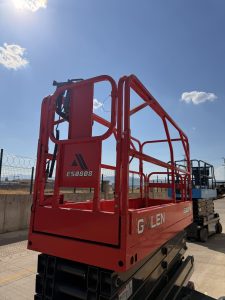
With its distinctive crisscross scissor mechanism, the scissor lift quickly became one of the most widely used aerial work platforms. Its stability, simplicity, and straight vertical movement made it ideal for:
Construction sites
Warehouses and logistics centers
Industrial maintenance applications
As adoption increased, industry professionals began using “scissor lift” to clearly distinguish this machine from other lifting equipment. Unlike “manlift,” this term is specific, accurate, and unambiguous.
Standards and the Shift in Terminology
The real turning point came with the introduction of international safety standards, including:
EN 280 in Europe
ANSI/SAIA A92 in North America
These standards formally classified machines under the umbrella term MEWP (Mobile Elevating Work Platform).
As a result:
The term “manlift” was removed from technical documentation
“Scissor lift” became the official name for vertical scissor-type machines
AWP / MEWP became the recognized category for all aerial access equipment
This shift was not merely semantic—it significantly improved clarity, safety, and regulatory compliance across the industry.
Why Correct Terminology Matters Today
Although “manlift” is still heard in casual conversations, the professional and correct term today is scissor lift.
Using accurate terminology provides real benefits:
Safety: Reduces the risk of selecting the wrong equipment
Compliance: Aligns with international standards and training requirements
Clarity: Improves communication between operators, rental companies, and manufacturers
At Galen Equipment, we consistently use industry-standard terminology to ensure clear, professional, and compliant communication with our customers and partners worldwide.
Conclusion: From Manlift to Scissor Lift
The transition from “manlift” to “scissor lift” reflects the broader evolution of the access equipment industry—from improvised lifting devices to highly engineered, standardized machines.
Manlift: Outdated, generic, and informal
Scissor Lift: Accurate, modern, and professional
MEWP / AWP: The formal category covering all aerial work platforms
By adopting the correct terminology, the industry promotes safer operations, clearer communication, and higher professional standards.