
 ES SERIES
 RT SCISSOR LIFTS
 FORKLIFTS
 ARTICULATED BOOMS
 TELESCOPIC BOOMS
 PROMOTIONS
 SPARE PARTS


Understanding the Right Terminology: Scissor Lift, Manlift, or Aerial Work Platform?
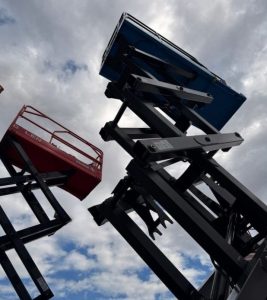
If you have ever searched for equipment to safely work at height, you have likely encountered different terms such as scissor lift, manlift, aerial work platform (AWP), or MEWP (Mobile Elevating Work Platform). Although these terms are often used interchangeably in daily conversations, they do not all mean the same thing.
This confusion can lead to misunderstandings when renting, purchasing, training operators, or ensuring regulatory compliance. In this article, we clarify the correct terminology, explain modern industry standards, and show why using the right language truly matters.
The Term “Manlift” – Outdated but Still Common
The word “manlift” has been used for decades as a casual way to describe equipment that lifts people to a working height. While still common in everyday speech, it is considered outdated and is no longer used in technical standards or official documentation.
There are several reasons for this:
It is too generic and does not define the type of lift
It can cause confusion, as it may refer to scissor lifts, boom lifts, or other machines
It is not aligned with modern safety and compliance standards, which require precise terminology
Although you may still hear “manlift” in informal conversations, it is not recommended for professional, technical, or safety-critical communication.
The Term “Scissor Lift” – Accurate and Specific
A scissor lift is the correct and industry-standard term for machines that use a crisscross scissor mechanism to provide vertical lifting.
This terminology is consistently used in:
Manufacturer manuals
Operator training materials
International safety standards such as EN 280 and ANSI/SAIA A92
Scissor lifts are commonly used for:
Indoor and outdoor maintenance
Construction and installation work
Warehouses and logistics facilities
Tasks requiring stable vertical elevation
When you say “scissor lift,” professionals immediately understand which machine is being referenced. For clarity, professionalism, and safety, this is the preferred term.
Aerial Work Platform (AWP) – The Broader Category
An Aerial Work Platform (AWP) is a general category name that includes all mobile equipment designed to lift people safely to height.
AWPs include:
Scissor lifts
Articulating boom lifts
Telescopic boom lifts
Vertical mast lifts
Trailer-mounted platforms
In other words, every scissor lift is an AWP, but not every AWP is a scissor lift. The term AWP is useful when speaking broadly about access equipment, but it lacks specificity when referring to a particular machine type.
MEWP – The Modern Industry Standard
Modern regulations and safety standards now use the term MEWP (Mobile Elevating Work Platform) as the formal classification.
This terminology is defined in:
EN 280 (Europe)
ANSI/SAIA A92 (North America)
MEWPs are further classified by:
Type A / Type B – Vertical movement vs boom movement
Category 1 / 2 / 3 – Based on mobility and stability
While MEWP may sound technical to end users, it is the globally recognized term in safety, certification, and compliance contexts.
Why Using the Right Terminology Matters
Correct terminology is not just a linguistic preference—it has real operational and safety implications:
Safety: Reduces the risk of selecting the wrong equipment
Compliance: Aligns with regulations, training standards, and certifications
Clarity: Improves communication between operators, rental companies, and manufacturers
At Galen Equipment, we use industry-standard terminology to ensure clear understanding, regulatory compliance, and safe operation.
The Preferred Term Is “Scissor Lift”
Although “manlift” is still commonly heard, the correct and professional terminology is:
Scissor lift – When referring to the vertical scissor-mechanism machine
AWP / MEWP – When referring to the broader category of access equipment
Using accurate terminology helps avoid confusion, improves safety, and aligns with global industry standards.